

Stop thinking about keywords. Start thinking about things.
That shift represents the most significant evolution in search optimization since Google launched. Not evolution in the sense of gradual improvement—evolution in the sense of dimensional change. We moved from optimizing for character strings to optimizing for real-world concepts with attributes, relationships, and context.
Entity-based SEO is how you build authority in this new dimension. It is how you ensure that when someone searches for expertise in your space, Google recognizes you as a distinct, well-defined, trustworthy thing—not just a collection of pages mentioning relevant words.
I have implemented entity optimization strategies for B2B companies across the US, UK, and Canada. The pattern is consistent: businesses that establish themselves as recognized entities in Google’s Knowledge Graph see traffic growth that withstands algorithm updates. They appear in AI Overviews without paying for placement. They get cited by large language models as authoritative sources. Their competitors, still chasing keyword rankings, wonder why their tactics stopped working.
Let me show you exactly what entity-based SEO means, how it differs from everything you learned about traditional optimization, and how to build entity authority systematically.
What Is Entity-Based SEO?
Entity-based SEO optimizes content around recognizable concepts and their relationships rather than isolated keywords. It treats search as a process of identifying things—not matching text.
Google defines an entity as “a thing or concept that is singular, unique, well-defined, and distinguishable.” This definition appears in their documentation because it guides how their systems process information. When Google encounters “Salesforce,” it does not see eight characters. It sees an entity: a cloud-based software company founded in 1999, headquartered in San Francisco, providing customer relationship management services, with specific products, executives, and market position.
Entity-based SEO builds upon semantic seo fundamentals, the broader practice of optimizing for meaning, context, and user intent rather than isolated keywords.
This entity exists in Google’s Knowledge Graph—a massive database that, as of May 2024, contains 1.6 trillion facts about 54 billion entities. The Knowledge Graph powers everything from Knowledge Panels to AI-generated answers. When you optimize for entities, you are inserting your brand into this structured system of understanding.
Traditional keyword SEO asks: “How do I rank for this term?” Entity-based SEO asks: “How do I become the definitive source for this concept?” The first question leads to content tactics. The second leads to authority building. Both matter, but the second determines whether you survive the transition to AI-driven search.
How Entity-Based SEO Differs From Keyword SEO
The difference is not philosophical. It is structural.
Carolyn Shelby from Yoast described it precisely: keyword SEO works on a flat map while entity SEO operates in three-dimensional space. Keywords help you appear somewhere on the map. Entities determine whether you shine brightly enough to be selected from the landscape.

This is not metaphor. In the retrieval layer, large language models treat concepts, brands, authors, and facts like stars clustered in constellations determined by topic and relevance. Queries move through semantic space along trajectories shaped by phrasing. The entities that get pulled into AI-generated answers are those with enough gravity—well-established, strongly connected concepts that LLMs recognize as authoritative.
Understanding this dimensional difference changes everything about how you approach optimization.
The Structural Difference: Strings vs Concepts
Keywords are strings of text. They are sequences of characters that match or do not match. When you optimize for “best CRM software,” keyword SEO focuses on that exact phrase and close variants—”top CRM software,” “best customer relationship management software,” “CRM software best.”
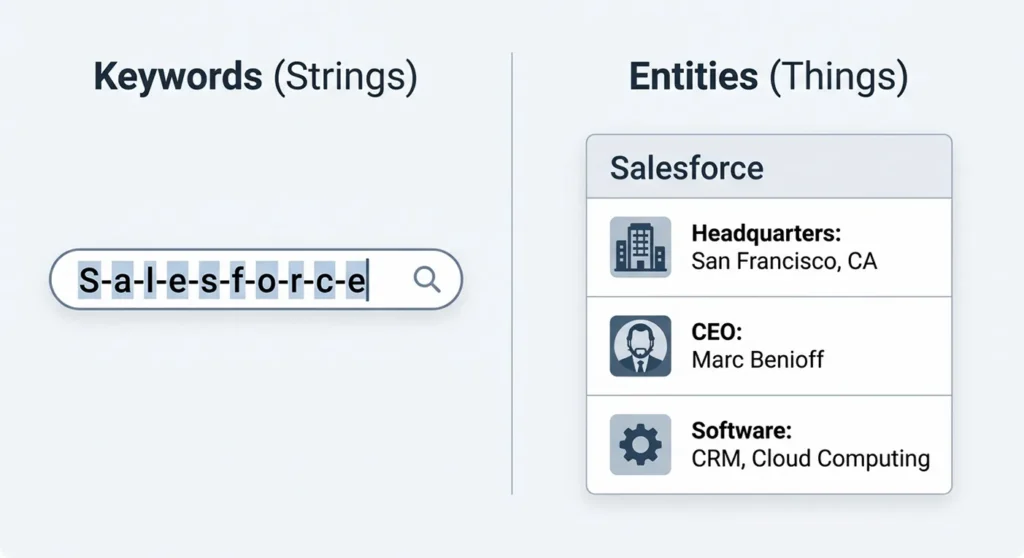
Entities are concepts with attributes, relationships, and context. When you optimize for the entity “CRM software,” you recognize that this concept connects to “Salesforce,” “HubSpot,” “Zoho,” “customer relationship management,” “sales automation,” “lead tracking,” “pipeline management,” and “contact management.” These relationships exist in vector space whether your content mentions them or not. Your job is to make those connections explicit so search engines understand how your expertise fits into the broader conceptual landscape.
The practical difference shows in ranking behavior. A keyword-optimized page might rank for “best CRM software” and a few close variants. An entity-optimized page ranks for that term plus “Salesforce alternatives,” “HubSpot vs Zoho,” “sales automation tools,” and “how to choose CRM software”—because all these queries traverse the same semantic constellation.
How Keywords and Entities Work Together
Keywords remain essential. They are the signals users send when they want information. Entities are the destination search engines navigate toward once they parse those signals.
An effective strategy recognizes that keywords help match content to user intent, while entities help search engines understand how that content fits into broader knowledge systems. Your keywords should map to specific entity details—features, use cases, comparisons, FAQs, structured data. The clearer those entity connections, the easier search engines match your page to related searches, especially long-tail queries where intent is clear but wording varies wildly.
Think of keywords as the questions people ask. Entities are the answers you provide. You need both the question and the answer to complete the communication.
Comparison: Keywords vs Entities at a Glance
Keywords are strings or phrases users type into search engines. “Best running shoes” is a keyword. Entities are specific, recognizable concepts like “Nike” or “Marathon training.” Keywords focus on exact matches and variations. Entities focus on context, attributes, and relationships. Keywords are used for matching content to queries. Entities are used for understanding meaning and intent. The SEO impact differs dramatically: keywords drive rankings for specific terms while entities drive visibility across related concepts, AI citations, and Knowledge Panel appearances.
Why Entity-Based SEO Matters for Modern Search
Three shifts make entity optimization non-negotiable: the rise of AI search, the expansion beyond blue links, and the demand for cross-language consistency.
AI Search and Large Language Models
AI-driven search does not read the web like humans. It builds models of the world made of entities and their connections. When Google sees “Jaguar,” it must decide between the animal, the car brand, or the NFL team. AI makes this call using entity context—nearby terms, linked pages, structured data, and known Knowledge Graph relationships.
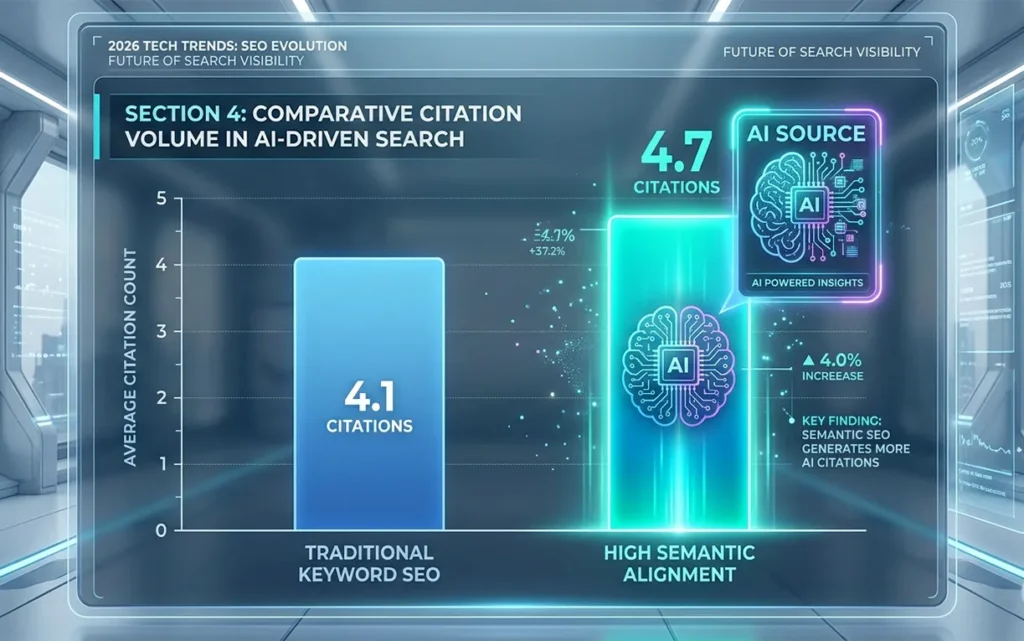
Research from 2025 shows that pages with high semantic alignment between content and meta descriptions receive up to 4.7 AI citations versus 4.1 for low-alignment pages. As 66% of consumers believe AI will replace traditional search within five years, entity optimization becomes the price of admission for visibility—not a competitive advantage, but a baseline requirement.
Beyond Blue Links: Knowledge Panels and Rich Results
Entity-based structures power the intuitive search results we see today. When you search for a notable person, you see a Knowledge Panel—not a list of pages mentioning their name. This panel displays the subject as a defined entity, grouping biographical details, works, and related concepts into a single authoritative source.
Entity SEO makes your brand eligible for these high-visibility placements. Without entity recognition, you compete in the standard results. With it, you appear in answer boxes, People Also Ask entries, and AI-generated overviews that capture attention before users scroll to traditional results.
Cross-Language and Cross-Device Consistency
Entities enable search improvements that transcend language barriers. A search for “red” includes results for “rouge” or “rojo” when settings allow because these are the same entity in different linguistic forms. Mobile-first indexing relies on entity understanding to deliver relevant results regardless of screen size or input method. The same entity signals work across devices and languages because they represent concepts, not character strings.
How Google’s Knowledge Graph Works
The Knowledge Graph is the infrastructure that makes entity-based search possible. Understanding its scale and function explains why entity optimization outperforms keyword tactics.
The Scale of Knowledge Graph Data
As of May 2024, Google’s Knowledge Graph contains 1.6 trillion facts about 54 billion entities. These data points power Knowledge Panels, answer complex informational queries, and enable AI systems to retrieve reliable information without hallucination.
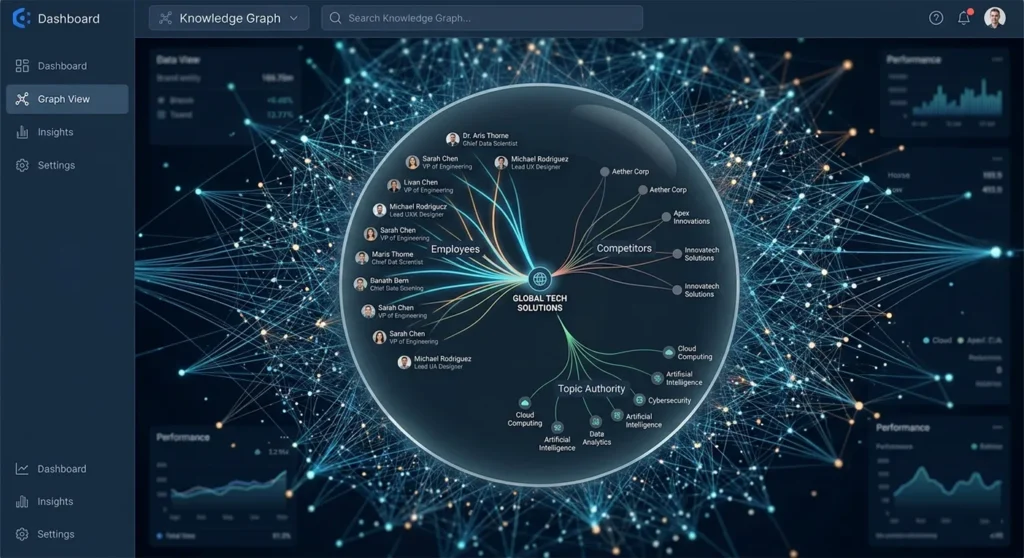
When your content clearly describes entities and their relationships, you insert your brand into this structured system. When you fail to define entities explicitly, you remain in the unstructured web—competing on keywords while recognized entities capture the authoritative placements.
From Crawling to Understanding
Search engines no longer evaluate pages as collections of words. They evaluate meaning. The Knowledge Graph connects brands, tools, topics, and attributes through entity relationships that keywords alone cannot capture.
This explains why pages often rank for multiple related queries even without exact keyword matches. A page optimized for “email automation” may also rank for “AI marketing workflows” when both concepts share strong semantic ties in the Knowledge Graph. The entity connection matters more than the lexical similarity.
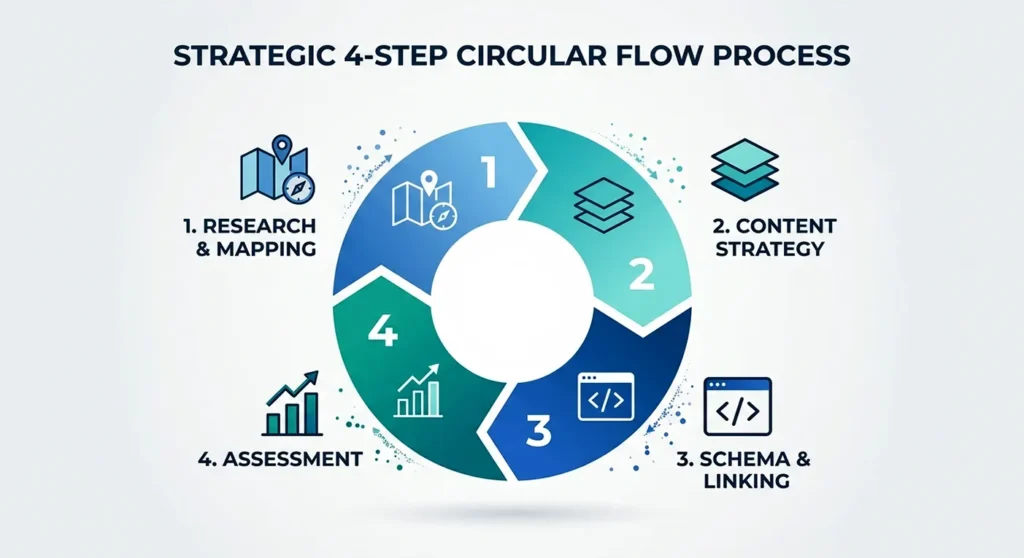
The 4-Phase Entity Optimization Workflow
Entity optimization is not a tactic you apply once. It is a systematic workflow that builds authority over time. I use this four-phase approach with clients to establish entity recognition and maintain it.
The systematic approach I am about to describe extends the implementation framework for entity optimization that covers the technical infrastructure required for semantic search success.
Phase 1: Entity Research and Mapping
SEO begins by identifying entities aligned to business services or products. Through vector embedding analysis using tools like Google’s Natural Language API or Semrush, teams create numerical representations of semantic associations. This reveals patterns of topic similarity and competitive gaps.
Identify main entities with associated entities. “Project management” might connect to “resource planning,” “capacity management,” “project forecasting,” and “team collaboration.” Limit core entities to maintain focus and resource allocation—attempting to own too many concepts dilutes authority rather than building it.
Before mapping entities, conduct thorough semantic keyword research to understand how your audience phrases queries around core concepts.
Phase 2: Content Strategy and Cluster Building
Build topic clusters around core entities. Create one primary pillar page that acts as the entity’s home—a comprehensive resource covering the concept broadly. Develop supporting pages that answer related questions, cover use cases, explore comparisons, and examine applications. Each piece reinforces the same entity from different angles.
Internal linking between cluster pages strengthens semantic connections. This hub-and-spoke model creates what search engines recognize as topical authority—depth of coverage that signals genuine expertise rather than superficial targeting.
For organizations lacking internal resources to architect these structures, professional topical map development for entity clusters ensures your hub-and-spoke model aligns with search engine expectations.
Phase 3: Schema Implementation and Link Building
Implement schema markup to highlight entity relationships explicitly. Use JSON-LD with the @graph property to define multiple interconnected entities in single code blocks. A service page might include Organization schema for your business, Service schema for the offering, FAQPage schema for common questions, and Review schema for testimonials—all explicitly connected.
Execute backlink building using entity-relevant anchor text. Target publications discussing your entities, seeking placements that create clear conceptual associations. Focus internal linking fixes on pages with topical relevance but lacking incoming links from related content. These represent the fastest wins for entity cluster cohesion.
While this overview covers strategic application, detailed schema markup implementation requires attention to JSON-LD syntax, @graph properties, and validation protocols.
Phase 4: Performance Assessment and Refinement
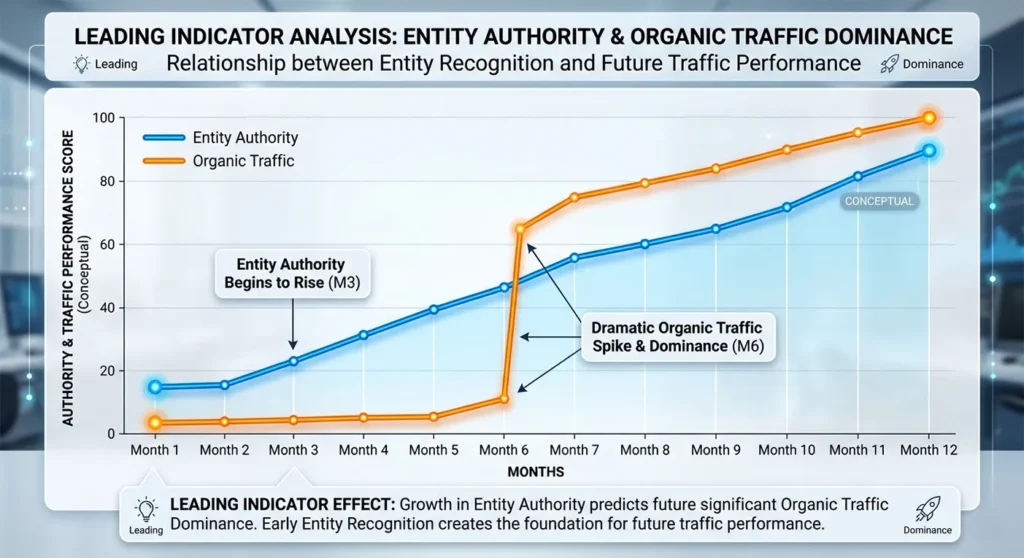
Track implementation progress and entity authority signals. Monitor ranking increases for related terms, not just target keywords. Track AI Overview citations for entity-related queries. Measure frequency of brand mentions in AI-generated responses.
Traditional metrics like traffic and conversions emerge later as lagging indicators. Use early signals to refine strategy: maintain current approach for high-performing entities, accelerate investment in promising clusters, or adjust tactics for underperforming concepts.
How to Become a Recognized Entity
Entity recognition requires consistent signals across your entire web presence—on-site structure, off-site mentions, and cross-platform consistency.
Building Entity Signals On Your Site
Before pursuing external mentions, establish clear entity signals on your own property. Build topic clusters around central themes rather than publishing random articles targeting unrelated keywords. Ensure every page is accessible within three clicks and receives at least five internal links from relevant content.
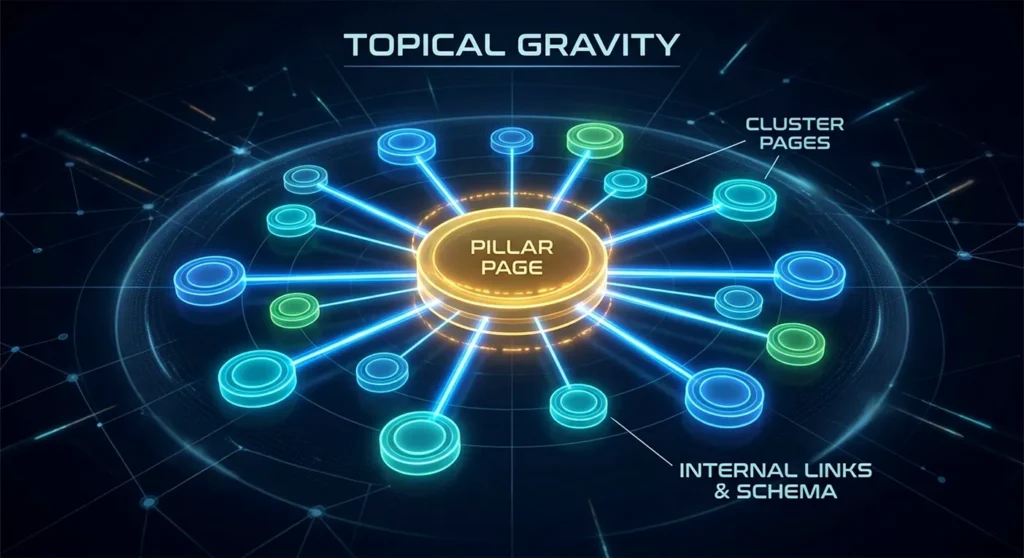
Use schema markup to define entities explicitly. Article schema for blog posts, Organization schema for your business, Person schema for authors, Product or Service schema for offerings, and FAQPage schema for question content all contribute to entity definition. Run pages through Google’s Natural Language API to verify that primary entities are recognized correctly and that sentiment analysis aligns with your positioning.
Establishing Entity Authority Off-Site
Search engines look at how other websites mention you to validate entity claims. Claim profiles on major platforms—G2, Capterra, Crunchbase, industry directories, and Google Business Profile for local entities. These provide structured data about your business that reinforces your entity definition.
Then pursue high-quality entity mentions on trusted websites in your niche. Listicle placements are especially powerful—structured, comparison-based content that AI systems frequently cite for answer generation. Ensure mentions create clear entity relationships: your brand alongside competitors, your tool in “best tools” lists, your company referenced in relevant educational content.
Maintaining Consistency Across the Web
Consistency transforms entity signals into trust signals. Use the same naming conventions, professional bios, and expertise signals everywhere. Avoid multiple names for the same entity or conflicting descriptions that confuse search engines about what you actually do.
List your business carefully on high-domain-authority sites relevant to your industry. Over time, consistent presence across directories, publications, and platforms establishes your entity in Google’s Knowledge Graph and makes you eligible for the authoritative placements that drive sustainable traffic.
Common Entity SEO Mistakes to Avoid
Even experienced practitioners undermine their entity strategies with predictable errors.
Treating Schema as a Shortcut
Schema markup helps Google label what is on the page. It does not create authority. If content is thin or unclear, schema highlights that deficiency faster. Markup without substantive entity coverage wastes implementation effort and can trigger quality filters that harm rankings.
Publishing Thin Entity Pages
A quick definition page will not earn trust. Weak entity pages struggle to rank, fail to attract links, and cannot support cluster structures. Depth matters more than breadth—one comprehensive entity page outperforms three superficial ones every time.
Chasing Unrelated Entities
Dropping trendy topics or random brands into your content dilutes relevance and confuses search engines about your actual positioning. Stay focused on core entities that define your expertise. Authority comes from depth in specific spaces, not breadth across unrelated topics.
Ignoring Internal Structure
Entities need connections to build constellations. If supporting pages do not link to hubs and to each other where logical relationships exist, Google cannot map the entity web you are trying to create. Internal linking is the connective tissue of entity strategy—without it, you have isolated pages rather than authoritative presence.
Sending Inconsistent Signals
Mixed terminology, shifting positioning, and conflicting service descriptions make your entity harder to identify and trust. Clarity and consistency cut through ambiguity to ensure authority attributes to the correct entity across all contexts.
Measuring Entity SEO Success
Traditional SEO metrics miss entity progress. You need indicators that capture authority recognition before it translates to traffic.
Early Authority Signals
Monitor ranking increases for related terms—not just target keywords. Track AI Overview citations when users search entity-related queries. Measure frequency of brand mentions in AI-generated responses. These precede traditional traffic and conversion metrics by weeks or months, giving you early validation that entity optimization is working.
Knowledge Graph Integration
Search your brand name regularly. Does Google display a Knowledge Panel with accurate information about your business? Are key personnel recognized as distinct entities? Do searches for your proprietary methodologies or frameworks return your content? These confirmations indicate that search engines have parsed and stored your entity definitions.
Topical Coverage and AI Citations
Use Google Search Console to track impressions for related queries you never explicitly targeted. Monitor which pages AI platforms cite using specialized tracking tools. Strong entity optimization correlates with significantly higher AI citation rates—sometimes 4.7 citations per query versus 4.1 for entity-poor competitors.
Frequently Asked Questions
What is an entity in SEO?
An entity is a specific, recognizable concept like a person, place, product, or idea that search engines can identify and understand in context. Unlike keywords, entities have attributes and relationships that help search engines grasp meaning beyond exact text matches.
What is the Knowledge Graph?
Google’s Knowledge Graph is a database of 1.6 trillion facts about 54 billion entities. It powers Knowledge Panels, answers complex queries, and helps AI systems retrieve accurate information by understanding relationships between concepts.
How do I find entities for my content?
Start with your core products or services. Use Google’s Natural Language API to analyze how Google recognizes entities in your content. Research Wikipedia and Wikidata to understand how knowledge bases structure your topics. Examine “People Also Ask” boxes and related searches to discover connected entities.
Does entity SEO replace keyword research?
No. Keywords remain essential for matching user queries. Entity SEO adds a layer of meaning that helps search engines understand context and relationships. Use keywords to capture demand. Use entities to build authority.
How do I appear in a Knowledge Panel?
Establish consistent entity signals across your website using schema markup. Build topical authority through content clusters. Earn mentions on trusted external sites. Claim and optimize profiles on major platforms. Over time, as Google recognizes your entity, you become eligible for Knowledge Panel display.
How do entities differ from keywords?
Keywords are text strings users type. Entities are concepts with meaning. “Apple” as a keyword could mean the fruit or the company. As an entity, context and attributes make the distinction clear. Keywords match queries. Entities understand them.
Final Words
Entity-based SEO is not an optimization tactic. It is an authority strategy. The businesses that establish themselves as recognized entities now will dominate search as AI systems increasingly rely on structured knowledge rather than pattern matching.
The Knowledge Graph is not static. It grows by 1.6 trillion facts. New entities emerge constantly. The window for establishing authority in your space narrows as competitors recognize what you now understand: that search has moved from strings to things, from matching to meaning.
If you need professional support with entity research, topical map development, or Knowledge Graph optimization, I offer entity-based SEO services that include comprehensive audits and implementation. The framework outlined here has generated consistent authority gains across B2B, SaaS, and publishing verticals.
Start your entity audit this week. Identify the three core concepts that define your expertise. Build one comprehensive pillar page that establishes your authority for the first entity. Create the connections that search engines cannot ignore. The Knowledge Graph is waiting. Your entity belongs in it.