

You have optimized every page. The keywords are researched, placed, and tracked. Your backlink profile grows monthly. And yet, a competitor with half your domain authority just captured the featured snippet you targeted for six months.
They did not outspend and outwork you. They understood something you missed: Google stopped matching keywords years ago. It started understanding meaning. While you were optimizing for 2010, they were building for 2026.
This is the divide between traditional SEO and semantic SEO. It is not an upgrade but a different operating system. Traditional SEO treats search engines like pattern matchers while Semantic SEO treats them like knowledge systems that evaluate expertise, relationships, and context. The first approach produces temporary gains. The second produces authority that compounds.
I have guided B2B technology companies through this transition. The pattern is consistent. Those who shift see traffic stabilize through algorithm updates, content get cited by AI systems, and topical dominance replace keyword chasing. Those who cling to density metrics watch rankings erode as Google improves at understanding meaning.
Let me show you the structural differences between these approaches, why the gap widens monthly, and how to transition without abandoning what works.
The Core Difference: Entities vs Keywords
The fundamental distinction between semantic SEO and traditional SEO is dimensional. Traditional SEO operates in one dimension: keywords. Semantic SEO operates in three: entities, attributes, and relationships.
Traditional SEO operates on matching or keywords. You identify the exact phrase someone might type. You place that phrase or keyword in precise locations with calculated frequency. You acquire links containing that phrase. The entire architecture assumes search engines find and count text strings.
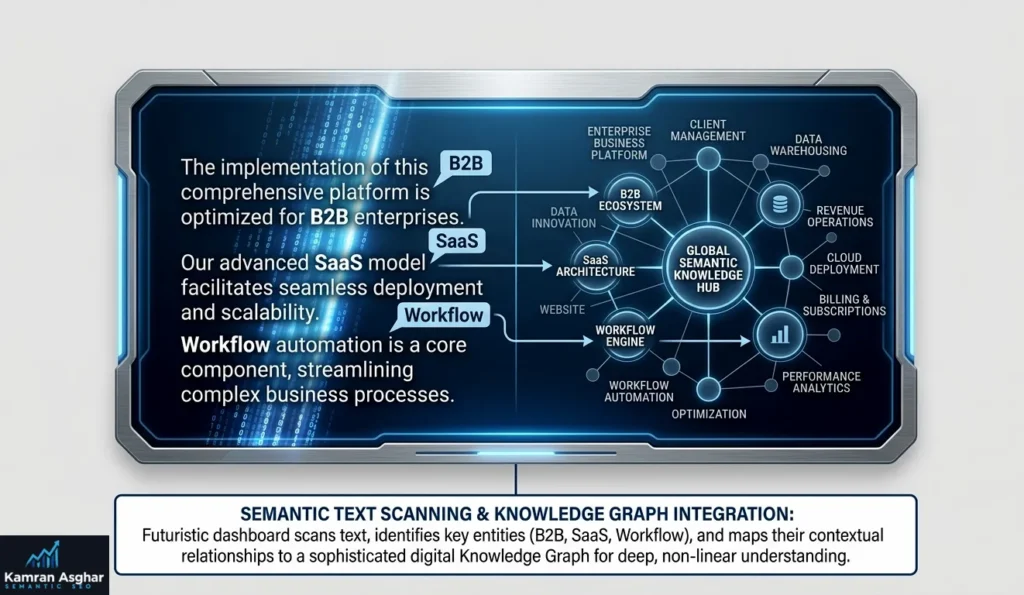
Semantic SEO operates on understanding or entities. You identify the concept behind the query. You build content that demonstrates comprehensive knowledge of that concept, its attributes, its relationships to other concepts, and its applications in context. You structure information so machines extract meaning, not just index words.
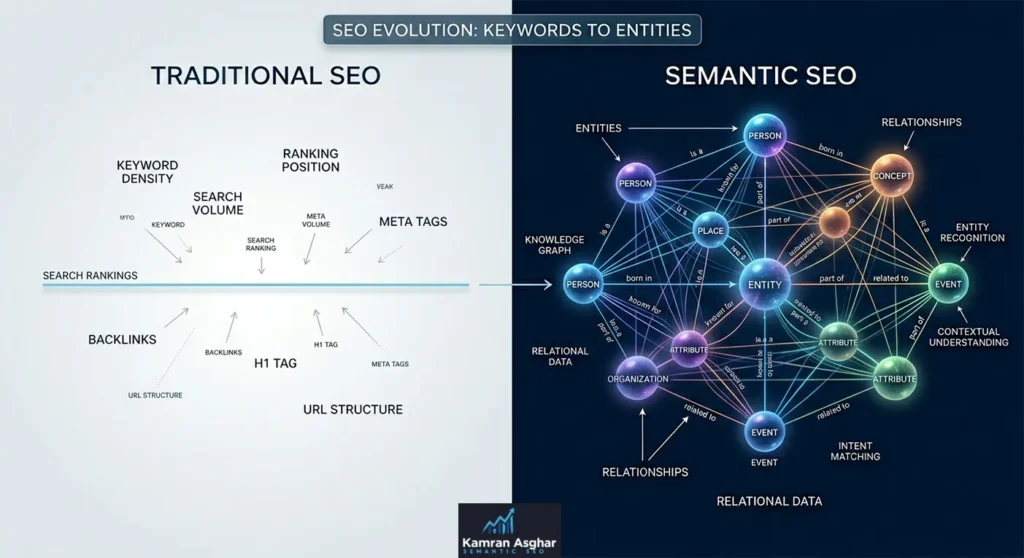
Consider a query like “project management software for remote teams.” Traditional optimization creates a page containing that exact phrase fifteen times, with variations like “remote team project management tool” and “software for managing remote projects.” The page targets the string.
Semantic optimization creates a content ecosystem around the entity “remote project management.” It covers asynchronous communication workflows, time zone coordination challenges, accountability systems for distributed teams, integration with video conferencing platforms, and comparison of methodology approaches. Each piece connects to others through internal links that declare relationships. The system targets the concept and every meaningful query that expresses it.
The result: traditional SEO ranks for the exact keyword and struggles with variations. Semantic SEO ranks for the keyword, 50 related queries, and questions that have never been asked before because the knowledge system understands intent, not just text.
How Architecture Differs: Silos vs Networks
The physical structure of content reveals which approach you are using from content lifespan to ranking stability.
Traditional Structure: Isolated Keyword Targets
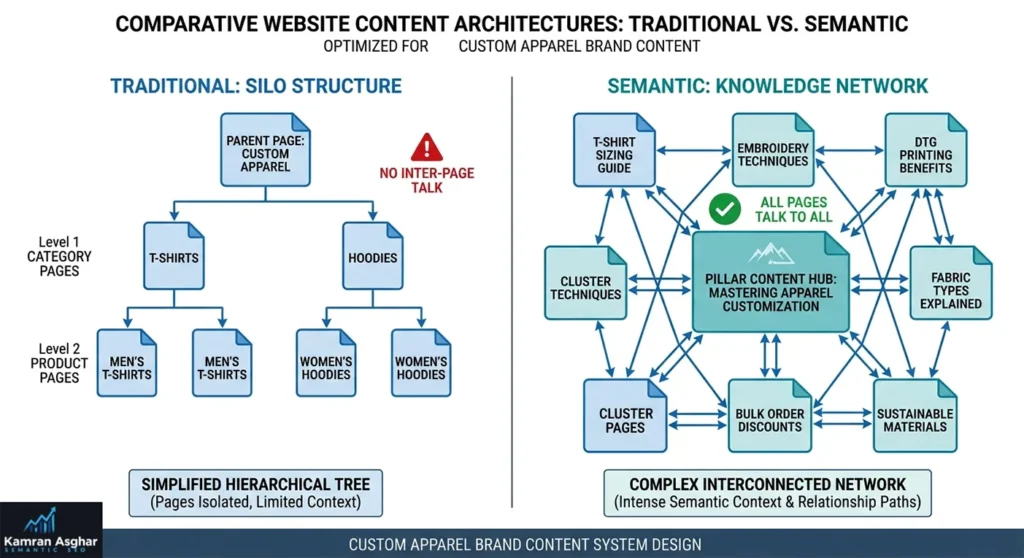
Traditional SEO builds pages as independent units. Each targets a specific keyword or phrase. The homepage links to category pages. Category pages link to individual posts. Posts rarely link to each other unless manually inserted. The structure is hierarchical and flat. This creates three predictable problems.
- Keyword cannibalization: multiple pages target overlapping terms and compete against each other.
- Thin coverage: each topic gets one page regardless of complexity.
- Orphaned content: posts published without strategic placement lose visibility.
Semantic Structure: Interconnected Knowledge Networks
Semantic SEO builds content as a network. A pillar page establishes authority for a core entity. 15 to 30 cluster pages explore specific aspects, applications, and questions related to that entity. Every cluster page links to the pillar. Related clusters link to each other and the pillar links outward to clusters.
This structure signals expertise depth. When Google crawls the network, it encounters the same entity repeatedly with new attributes and contexts. The entity gains definition and the relationships gain clarity. The site gains authority for the topic, not just the keyword.
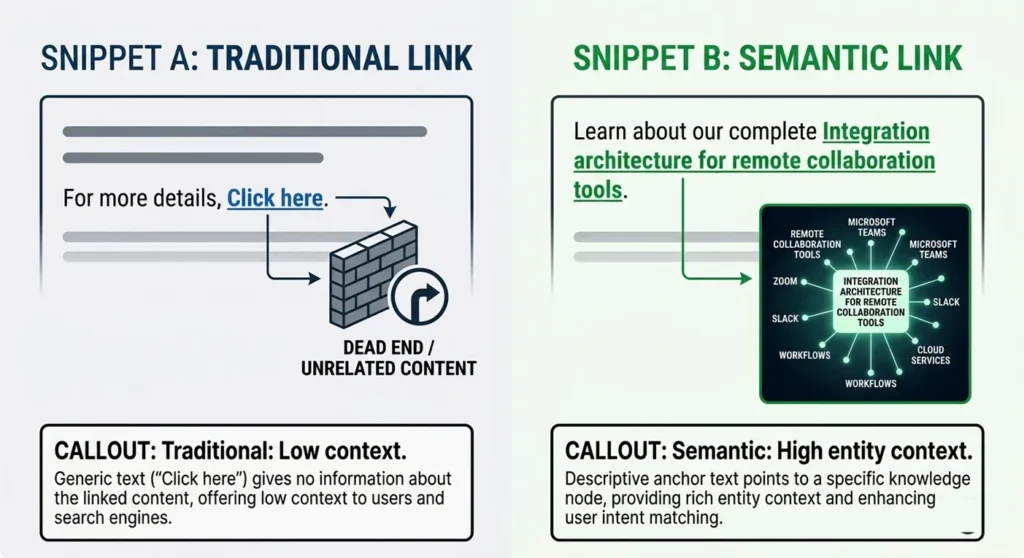
The internal linking difference is stark. Traditional SEO uses generic anchors: “click here,” “read more,” “this article.” Semantic SEO uses descriptive, entity-rich anchors: “asynchronous workflow management for remote teams,” “accountability systems in distributed project management,” “integration architecture for remote collaboration tools.” These anchors teach search engines what the linked page contains.
For organizations ready to architect these networks, professional semantic seo services provide the systematic mapping and construction that transforms isolated content into authoritative knowledge systems.
The heading structure tells the story. A traditional H2 reads “Our SEO Services” because it targets a keyword. A semantic H2 reads “How Kamran Asghar Structures Semantic SEO Services for B2B Companies” because it declares the entity and attributes in a statement that stands alone as a complete fact. This is how AI systems extract and cite your content.
For comprehensive guidance on building these structures, see our implementation framework for entity optimization that details the technical architecture required for semantic content networks.
The LSI Keyword Myth
One myth needs addressing before proceeding. Multiple SEO tools recommend using “LSI keywords” as part of semantic SEO. Google does NOT use Latent Semantic Indexing. Google uses NLP, Knowledge Graph, and transformer models like BERT. The accurate term is co-occurring entities or semantic keywords. Calling them LSI keywords shows a fundamental misunderstanding of how semantic content structures meaning for machines.
Why Google Abandoned Keyword Matching
The shift from matching to understanding was not sudden. It unfolded across 15 years of algorithm evolution. Understanding this timeline explains why traditional tactics produce diminishing returns.
The Five Algorithm Shifts
In 2013, Hummingbird introduced conversational search. Google began processing entire queries rather than individual words. Context started mattering more than keyword presence.
In 2015, RankBrain deployed machine learning to interpret queries Google had never seen. Fifteen percent of daily searches are completely new. RankBrain handles these by understanding meaning, not matching strings to indexed pages.
In 2019, BERT applied natural language processing to comprehend word relationships. Prepositions stopped being ignored. Contextual meaning became computable. By 2020, BERT influenced nearly every English search result.
In 2021, MUM expanded this capacity across languages and modalities. Text, images, and video became jointly understandable. Knowledge transcended linguistic boundaries.
In 2024, AI Overviews began generating answers by synthesizing information from multiple sources. These systems extract from semantically structured content. Keyword-optimized pages lack the entity clarity required for selection.
Each step moved Google further from counting keywords toward evaluating knowledge. Sites built on keyword density lost forty to sixty percent of traffic through core updates in 2018, 2019, 2021, and 2023. Sites built on semantic architecture maintained or gained position through the same updates.
How Authority Is Earned: Votes vs Depth
Traditional and semantic SEO measure authority differently, which changes where you invest resources.
Traditional Authority: Backlink Volume
Traditional SEO treats authority as accumulation. Each backlink is a vote. More votes from authoritative sources mean higher rankings. Link building becomes the primary activity and content exists to attract links.
This model has two limitations.
- First, link quality is increasingly difficult to manipulate. Google’s detection of artificial link patterns improves constantly.
- Second, links help individual pages but do not demonstrate topical expertise across a domain.
Semantic Authority: Topical Depth
Semantic SEO treats authority as demonstration. You prove expertise by covering a topic comprehensively. You demonstrate understanding by connecting related concepts. You establish trust through accurate, original, cited information. Authority emerges from what you publish, not just who links to it.
The compounding effect differs dramatically. A traditional approach earns links to one page. That page ranks. Other pages compete separately. A semantic approach builds network effects. Each new cluster page strengthens every existing page in the network. Authority concentrates and compounds.
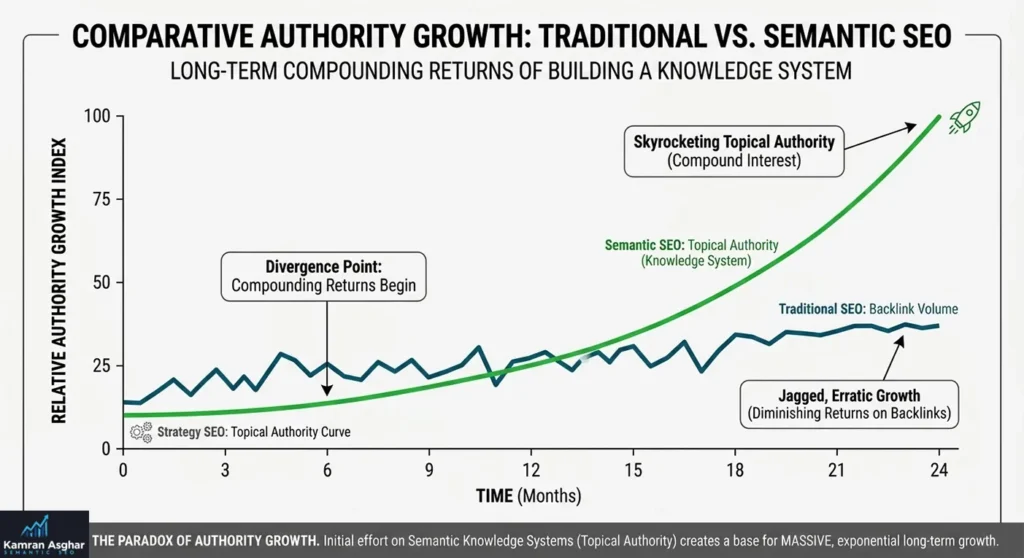
Both approaches benefit from external validation. But semantic SEO generates validation organically. Comprehensive, original content attracts citations naturally. Expertise demonstration earns mentions without outreach. The authority becomes self-sustaining.
For deeper understanding of how entity relationships drive this authority, explore our entity attribute value structures that form the foundation of semantic content architecture.
The mechanisms of authority have shifted from external validation to internal architecture, changing how you invest resources for maximum return.
AI Citations: Where Semantic SEO Dominates
This dimension receives inadequate attention in SEO discussions, yet it determines future visibility.
Large language models like ChatGPT, Claude, and Gemini answer queries by retrieving and synthesizing information. They cite sources. These citations are visibility without clicks, brand building without traffic, authority establishment before the user ever visits your site.
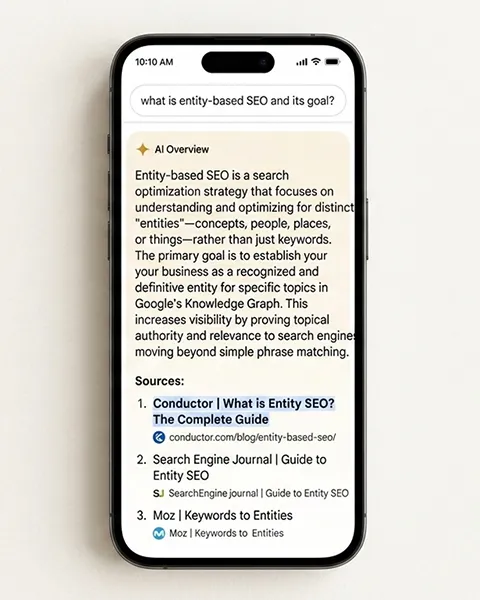
Traditional SEO content rarely gets cited. Keyword-optimized pages lack the entity clarity and factual structure that AI systems require. The content is built to rank, not to be understood and reused.
Semantic SEO content is built for both. Entity declarations make retrieval possible. Attribute-value structures make extraction clean. Self-contained factual statements make citation natural.
Research demonstrates this gap quantitatively. Content with high semantic alignment receives significantly more AI citations than keyword-focused alternatives. As AI systems handle an increasing share of information discovery, this advantage compounds into market dominance.
The distinction matters for your 2026 strategy. Traditional SEO optimizes for Google results pages. Semantic SEO optimizes for Google results pages, AI Overviews, ChatGPT responses, Perplexity summaries, and whatever retrieval systems emerge next year.
For specialized guidance on optimizing for this citation layer, see our generative engine optimization for ai citations approach that builds retrieval-ready content architecture.
7 Dimensions of Difference between Traditional SEO and Semantic SEO
The practical distinctions manifest across seven areas that determine content success.
| Dimension | Traditional SEO | Semantic SEO |
|---|---|---|
| Primary Target | Exact keyword strings | Entities and conceptual relationships |
| Content Organization | One page per keyword | Interconnected topic networks |
| Optimization Method | Density, placement, frequency | Entity declaration, relationship mapping, context building |
| Authority Source | Backlink volume and domain strength | Topical depth and knowledge demonstration |
| Update Resilience | Vulnerable to core algorithm changes | Stable or improving through updates |
| AI System Visibility | Rarely cited by LLMs | Frequently extracted and cited |
| Return Timeline | Quick initial gains, plateau at 3-6 months | Slower start, compounding returns from 6-12 months |
This comparison reflects patterns across B2B technology, professional services, and healthcare verticals. Individual results vary, but the structural advantage of semantic architecture is consistent.
When Traditional Methods Still Apply
Abandoning traditional SEO entirely would be a mistake. Specific tactics remain necessary regardless of content philosophy.
Technical foundations are universal. Site speed, mobile responsiveness, crawlability, HTTPS security, and structured data implementation matter for semantic and traditional approaches equally. These are hygiene factors, not differentiators.
Local search relies on traditional signals. NAP consistency, local citations, and Google Business Profile optimization remain essential for geographic relevance.
Keyword research retains value as an input to semantic planning. Understanding what language people use to express needs informs entity mapping. The difference is using keywords to understand intent rather than targeting them for density.
The transition is evolutionary, not revolutionary. Maintain technical foundations. Add semantic architecture. Gradually shift content investment from keyword targets to entity networks.
4 Stages Transition Path From Traditional to Semantic SEO
Moving from traditional to semantic SEO follows a predictable sequence that preserves existing value while building new authority.
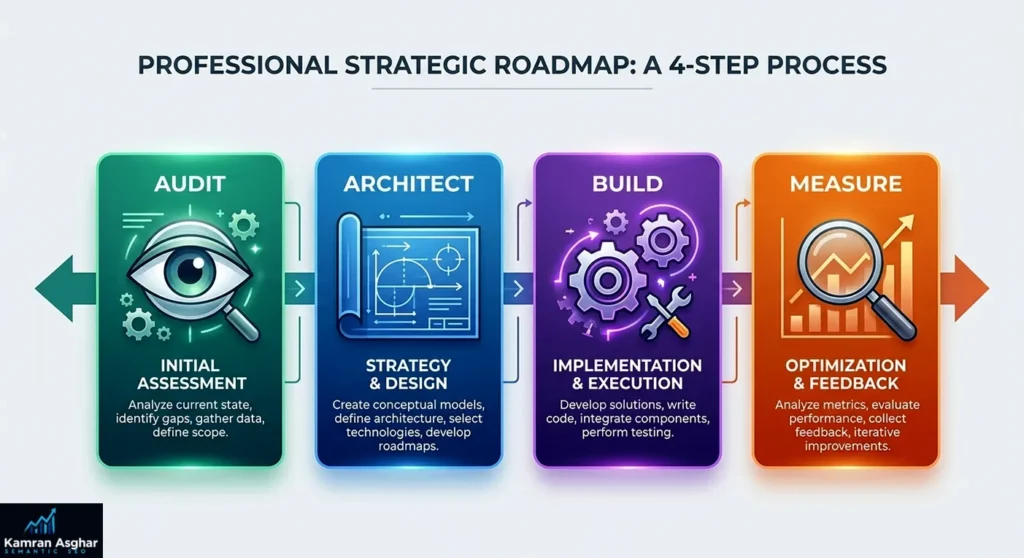
1. Audit and Map
Inventory existing content for entity coverage. Identify which pages target overlapping keywords and cannibalize each other. Map the entities you should own based on your expertise and market position. Document gaps where competitors have entity coverage you lack.
2. Architect the Network
Design pillar pages for your three to five core entities. Plan cluster content for each pillar, fifteen to thirty pieces covering every aspect, application, and question related to the entity. Map internal linking relationships before writing begins.
3. Build with Structure
Create content using entity declarations in headings. Write opening sentences that stand alone as complete facts. Include attribute-value structures that machines can extract. Link using descriptive, entity-rich anchors.
4. Measure and Expand
Track AI citation rates, ranking breadth across related queries, and engagement depth within topic clusters. Expand successful networks. Consolidate or improve underperforming content.
The full transition requires sixty to ninety days for planning and initial implementation. Results appear within ninety to one hundred twenty days. The investment produces compounding returns as networks mature and AI citations accumulate.
For hands-on support with this architecture, topic cluster architecture services provide the systematic mapping and implementation that accelerates your authority building.
FAQs
Is traditional SEO dead?
No, but it is insufficient. Technical SEO foundations remain necessary. Keyword research still informs content planning. But keyword density as a primary strategy produces diminishing returns and increasing vulnerability.
Can I use both approaches together?
Yes, during transition. Maintain existing rankings while building semantic structures. Eventually, semantic architecture subsumes traditional keyword targeting because comprehensive entity coverage naturally includes relevant keywords.
How long does semantic SEO take to show results?
Expect 90 to 120 days for initial entity recognition. 6 to 12 months for dominant topical authority and consistent AI citations. The timeline exceeds traditional SEO but produces compounding rather than flatlining returns.
Do I need to rewrite all my content?
No. Begin with pillar pages for core entities. Build cluster content around them. Update high-performing existing pages to include entity declarations and internal links to related content. Gradual transformation outperforms wholesale replacement.
Will semantic SEO work for local businesses?
Yes. Local entities (business name, location, services) map perfectly to semantic structures. Local SEO benefits from entity clarity in Knowledge Graph and Google Business Profile integration.
How do I measure semantic SEO success?
Track AI citation rates, featured snippet captures, ranking breadth across related queries, and Knowledge Panel appearances. These indicate semantic authority beyond traditional keyword rankings.
Final Words
The choice between semantic and traditional SEO is not a preference. It is a response to how search has fundamentally changed. Google’s algorithms, AI systems, and user expectations all favor meaning over matching, entities over keywords, and authority over optimization.
Traditional SEO built visibility on keyword matching in an era when matching was all machines could do. Semantic SEO builds authority on knowledge demonstration in an era when machines understand meaning.
The businesses that recognize this shift and restructure their content accordingly build sustainable, compounding visibility. Those that optimize for the past watch their rankings erode as the algorithms they tried to game become better at recognizing genuine expertise.
If you need support transitioning from traditional to semantic SEO, I offer systematic services that include entity mapping, topic cluster architecture, and AI citation optimization. The approach outlined here has generated consistent authority gains across B2B, professional services, and publishing verticals.
Begin your audit this week. Identify your core entities. Map one complete topic network. Create the first pillar page with entity declarations and relationship structures. Build the semantic foundation that search engines and AI systems recognize as authoritative.